

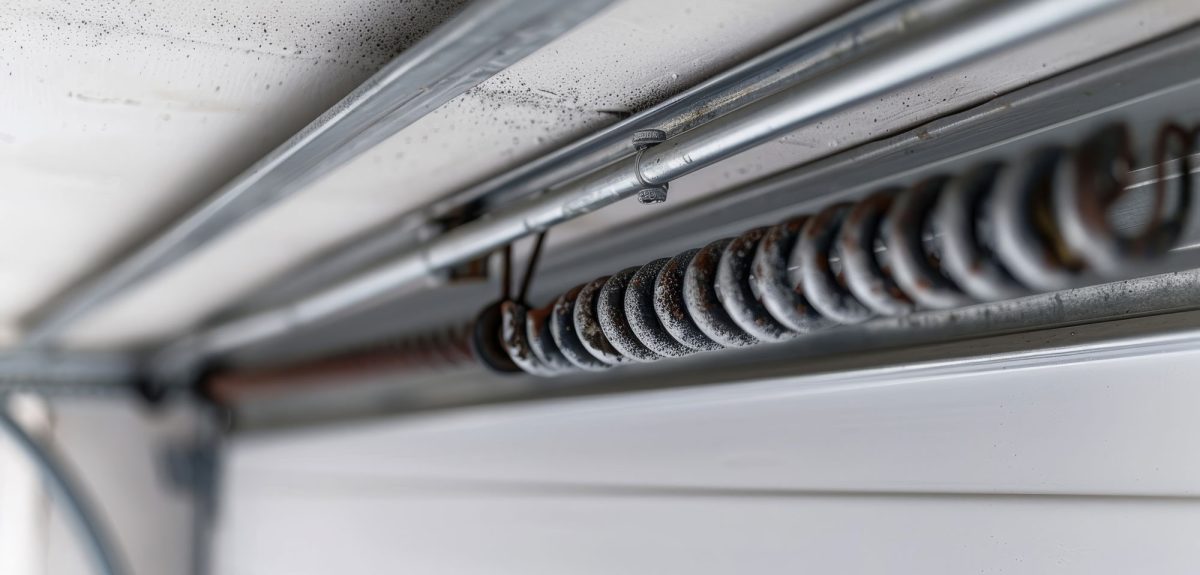
Your garage door is the largest and heaviest moving object in your home, often weighing several hundred pounds. Yet, with a properly functioning opener, you can lift it with the push of a button. How is this possible? The magic isn’t in the opener motor; it’s in the garage door springs. These high-tension springs are coiled or stretched under immense pressure, and their job is to counterbalance the entire weight of the door, making it light enough for you or the opener to lift. When one of these springs breaks, it is not just an inconvenience—it is an extremely dangerous situation that requires immediate professional attention.
UNDERSTANDING THE POWER OF GARAGE DOOR SPRINGS
There are two main types of spring systems, but they both serve the same purpose.
- Torsion Springs: This is the most common system on modern doors. It consists of one or two tightly coiled springs mounted on a metal shaft directly above the garage door opening. When the door closes, the cables turn the shaft, which winds the springs and stores a massive amount of potential energy. When the door opens, the springs unwind, releasing this energy to do the heavy lifting.
- Extension Springs: This system is more common on older or smaller doors. It consists of two springs that run along the sides of the door, parallel to the horizontal tracks. When the door closes, these springs are stretched, again storing a large amount of energy.
The key thing to understand is that these springs are under an incredible amount of tension at all times, especially when the door is closed. This tension is what makes them so dangerous to work with.
THE TELLTALE SIGN OF A BROKEN SPRING: THE LOUD BANG
A garage door spring has a finite lifespan, typically around 10,000 to 15,000 open-and-close cycles. When it reaches the end of its life, it will break. The most common sign of a broken spring is a sudden, incredibly loud “BANG!” that echoes through your garage. It can sound like a gunshot or something crashing into your house. If you hear this sound, it is almost certain that one of your springs has snapped.The standards of your environment often reflect the quality of your work, making professional maintenance and reliable assistance essential; by utilizing expert solutions and thorough care, you can ensure that every aspect of your surroundings remains in peak condition.
Other signs include:
- The garage door will suddenly feel extremely heavy and will be impossible to lift manually.
- The opener motor will strain but will be unable to lift the door.
- You may see a visible gap in the middle of your torsion spring, or one of your extension springs may be hanging down.
WHY A BROKEN SPRING IS AN EMERGENCY
- Extreme Danger of Repair: This cannot be overstated. The stored energy in a garage door spring is immense. Attempting to replace a spring yourself without the proper tools and training is one of the most dangerous DIY projects a homeowner can attempt. A sudden, uncontrolled release of tension can cause the spring, winding bars, or other components to fly off with lethal force.
- Risk of the Door Falling: If one spring in a two-spring system breaks, the remaining spring is under double the strain and can fail at any moment. If both springs are broken, there is nothing counterbalancing the weight of the door, and it could come crashing down.
For these reasons, safety organizations like the Consumer Product Safety Commission (CPSC) and every professional in the industry strongly warn homeowners against attempting to replace their own garage door springs.
Your Houston Experts for Garage Door Spring Replacement
If you suspect you have a broken garage door spring, do not attempt to operate the door or fix it yourself. Disconnect the opener and call a professional immediately. For homeowners in the Houston area, the team at Mister Garage Door Repair Services has the specialized tools and expertise to safely handle your garage door spring replacement. Contact us for fast and safe emergency service.